DIY vs. Professional Siding Installation: A Homeowner’s Reality Check
You already know the answer in your gut, I suspect. Yes, you can DIY siding on a Nashville home. The real question is whether you’ll be glad you did a few years from now, when the humidity and summer storms have tested every mistake you didn’t know you made.
Most of the time, especially for a full replacement, hiring a siding pro is the smarter move for your house, your wallet, and your sanity. DIY has its place. It’s just smaller than most people think.
Why So Many Nashville Homeowners Start Googling DIY Siding
Let’s be honest. You didn’t wake up dreaming about nailing fiber cement boards to your house.
You probably got a quote. It stung. You looked at the number, maybe pulled up a few YouTube videos, and thought, “That doesn’t look so bad. It’s just siding.”
And on the surface, it really does look simple. Straight lines. Repeating panels. A nail gun. Compared with HVAC or electrical, siding feels approachable. Plus, labor costs in Middle Tennessee are not shy. It’s normal to think, “If I buy the materials and put in the time, I can keep thousands in my pocket.”
Here’s the twist. Nashville isn’t Phoenix. We live with thick humidity that hangs in the air, sudden cloudbursts that pound the exterior, and long stretches where shaded walls stay damp. That mix is rough on any mistake that lets water sneak behind your siding. The internet rarely shows that part.
So if you’re asking “Can I install siding myself in Nashville,” the honest follow up should be “What happens if I get one or two important things wrong?”
What A Real Siding Job In Nashville Actually Looks Like
A full siding replacement is not a paint job. It’s more like surgery on your home’s outer shell. The visible boards are the easy part. The invisible layers underneath are what really keep your walls dry and solid.
Step 1 – Tearing Off The Old Stuff And Facing What’s Underneath
The first shock usually shows up the moment the old siding comes off.
Instead of clean plywood, you might find:
- Soft, spongy sheathing that crumbles under a screwdriver
- Dark stains around windows and doors where water has been creeping in
- Ants or termites that decided your framing was a snack
In a place like Nashville, with muggy summers and plenty of rainfall, those surprises are common, not rare. Moisture likes to linger here, especially on shaded sides of the house and around roof intersections.
A professional crew expects this. They probe the wood, figure out how far the damage goes, and decide what needs to be cut out and rebuilt. That’s not just for looks. If you cover rotten or wet material with new siding, the problem doesn’t pause. It keeps eating your house from the inside.
So ask yourself: if you peel back siding and find blackened, soft wood, do you genuinely know how to repair it the right way? Not in theory, but in a way you’d still trust ten years from now.
Step 2 – Fixing Substrate And Wood Rot Before It Grows
Under your siding lives the actual structure. That sheathing and framing is what your home depends on when storms roll through and the wind picks up.
In Middle Tennessee, wood rot shows up more than most people realize. Moisture sneaks in around bad caulking, missing flashing, or old windows, and then fungus slowly breaks down the wood. You don’t always see it from the outside. By the time it’s obvious, a pretty big chunk can be compromised.
Pros are trained to:
- Tell the difference between superficial staining and real structural decay
- Remove damaged sections cleanly, instead of halfway cutting out rot
- Tie new material into old so the wall acts as one solid system again
If this step is rushed or skipped, everything you install afterward is hanging on a weak foundation. That’s where DIY jobs often go sideways: the siding looks good for a while, but the rot behind it keeps spreading quietly.
Step 3 – Getting The Moisture Barrier And Flashing Exactly Right
Here’s where things get very Nashville‑specific.
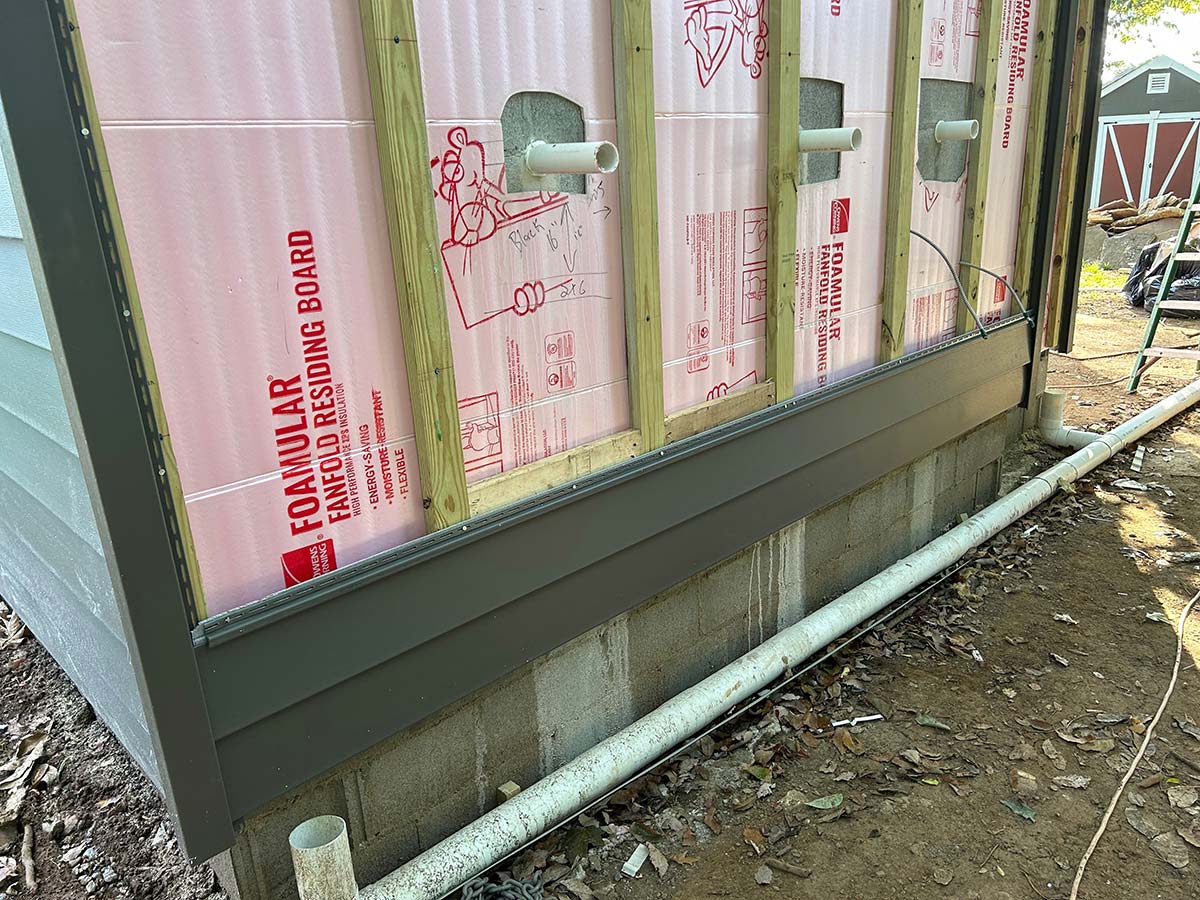
Think of the weather‑resistive barrier and flashing as your home’s rain gear. The siding is the coat. The barrier and flashing are the waterproof lining and the way you close the zipper.
Behind those pretty boards there should be:
- A continuous house wrap or similar barrier to shed water
- Flashing around windows and doors to direct water out, not in
- Kickout flashing where roofs meet walls so water does not pour behind the siding
Common DIY slip‑ups here:
- Overlapping house wrap in the wrong direction so water runs behind it
- Skipping tape or flashing at window heads and sills
- Leaving little gaps in the barrier that act like funnels for rain
In a dry climate, you might get lucky. In Nashville, where storms can slam the side of your home sideways and humidity slows drying, those little mistakes turn into chronic leaks. You do not always notice right away. It might be a subtle smell, a higher energy bill, or paint that keeps peeling in one spot.
Pros live in the world of “how water behaves.” Most homeowners don’t. That’s not a character flaw, it’s just the reality of experience.
Step 4 – Nails, Gaps, Clearances: The Boring Details That Actually Matter
Almost every siding product comes with very specific installation rules. Not suggestions. Rules.
They cover things like:
- What kind of nail you should use and how long it must be
- Exactly how far from the edge you can nail without cracking the board
- How much space to leave at the ends so boards can expand and contract
- How high the siding must be above grade and roof surfaces
Skip these, or improvise because “it seems fine,” and you set yourself up for panels that buckle, crack, warp, or suck up water from the wrong places.
Manufacturers are also pretty blunt. If you install their product in a way that clearly ignores their instructions, they have grounds to deny warranty coverage. So if a board fails early and an inspector sees obvious installation errors, you could be out of luck.
A pro crew doesn’t need to pause for every decision. They’ve done it enough times that the correct pattern is muscle memory. For a homeowner learning on the fly, every board can feel like a small puzzle, and that’s exactly when shortcuts creep in.
Step 5 – Caulking, Sealing, And All The Little Finishing Moves
The last stage looks easy, but it shapes both how your house looks and how it ages.
Caulking should block water from entering critical joints. It should not trap water where it needs to drain. The wrong bead in the wrong place can turn a smart detail into a moisture trap.
At this point a professional installer is:
- Using the right sealant for the material
- Filling joints that actually need to be sealed
- Leaving weep paths open
- Tying everything together with paint or touch‑up where needed
In Nashville’s damp seasons, trapped moisture is public enemy number one. Over‑caulking to “be safe” often has the opposite effect.
By the time you reach this stage as a DIYer, you may be exhausted, and that’s when “good enough” decisions are most tempting.
The Real Risks Of DIY Siding In Nashville
Now we get into the part nobody likes to think about before a project: what happens if things go wrong.
Moisture And Rot Are Less “If” And More “When”
Our local climate is tough on exterior walls. Heavy rains, sticky heat, shade from mature trees, and big swings in temperature all create perfect conditions for moisture problems.
Rot specialists and exterior contractors around Nashville keep seeing the same story: small leaks around windows, where siding meets the roof, or near trim that wasn’t sealed correctly, leading to long‑term moisture in the wall. The wood does not scream for help. It just slowly breaks down.
Water that sneaks behind siding:
- Weakens sheathing and framing
- Encourages mold growth inside wall cavities
- Can travel farther than you expect before it reveals itself
Fixing that later is not a simple “replace a few boards” job. It is tear‑off, structural repair, and then reinstalling a properly detailed system.
If the original DIY job also voided the product warranty, every bit of that cost sits with you.
Warranties, Permits, And The Not‑So‑Fun Paperwork Side
Another angle people tend to overlook is everything that lives in the fine print.
Many siding products reserve full warranty protection for installations that follow their instructions. Some expect trained or certified installers. If you go your own way with the installation and the product fails, they can look at the photos, compare them to the manual, and simply say no.
Then there are local rules. In Nashville, residential construction often requires permits, and exterior work can fall under that expectation. The permit process includes reviewing the project and, if the work is inspected, making sure it meets applicable standards.
Doing work that should have been permitted without involving the city can come back to bite you when:
- You go to sell and the buyer’s inspector flags “unpermitted exterior work”
- An insurance claim touches the exterior and the carrier starts asking questions
None of this means DIY is illegal or automatically a problem. It just means the responsibility for getting it right lands squarely on your shoulders.
Ladders, Heights, And The “I Didn’t Expect To Be That Scared” Factor
Siding a one‑story garden shed is one thing. Siding a two‑story house with a walkout basement is another.
National ladder safety stats are sobering. Thousands of people end up in emergency rooms every year from falls. Many of those falls happen from heights that feel “not that bad” when you are looking up from the ground.
With siding, you are not just stepping up to change a lightbulb. You are:
- Climbing tall ladders while handling long, awkward boards
- Working for hours near edges and drop‑offs
- Dealing with wind gusts that catch panels like sails
Professional crews invest in better ladders, stabilizers, scaffolding, and safety training for a reason. They have learned how quickly a small slip can become a life‑changing injury.
If you already get uneasy on a ladder above the first story, a full siding job is not the right project to work through that fear.
When DIY Can Make Sense For Nashville Siding
All of this does not mean you should never touch your siding. There are times when doing it yourself is completely reasonable.
Small, Simple, Ground‑Level Fixes
If your project is modest and close to the ground, “install siding yourself Nashville” might not be a crazy search at all.
Good DIY candidates:
- Replacing a handful of damaged vinyl pieces near the foundation
- Re‑attaching a single loose trim board where everything behind it is dry and solid
- Refreshing a small section of caulk that has clearly failed, after checking there is no hidden rot
You still want to:
- Read the manufacturer instructions instead of guessing
- Watch for soft wood or staining that suggests deeper issues
- Use the right fasteners and sealants
If the damage is widespread, reaches upper stories, or shows signs of moisture inside the wall, that is your cue to pause and call in help instead of grabbing more tools.
A Hybrid Approach: Let Pros Handle The Hard Parts
There is also a middle path that a lot of homeowners never consider.
You can:
- Have a professional team handle design, moisture barrier, flashing, and all the tricky, high‑up siding
- Take on jobs like yard prep, debris cleanup, or painting and touch‑up on low trim once the main work is done
This can trim some cost while still making sure the critical water‑management details and ladder work are done by people who do it every week.
It also gives you that satisfaction of being involved, without making you the test case for how well a novice can manage a full exterior system.
The Money Question: DIY Vs Pro In Nashville
Let’s talk about what most people worry about first: the cost.
What You Think You’ll Save With DIY
On the surface, the math looks simple. You price materials. You compare them to the contractor quote. You see the gap and assume that difference is what you’d save.
But a full siding job cost actually includes:
- The siding, trim, and all the accessory pieces
- House wrap, tapes, flashing materials
- Labor for tear‑off, repair, and installation
- Dump fees and hauling for the old material
- Tool and equipment rental
- Permits
DIY often forgets to account for:
- Multiple runs to the store to replace mis‑cut boards
- Extra materials because the learning curve comes with more waste
- Long stretches where your house is half torn open and the weather is not cooperating
So yes, your cash outlay might be lower at first. The question is whether it stays that way over the life of the siding.
The Price Of Mistakes And Doing It Twice
The most expensive projects are usually the ones done twice.
Contractors who fix DIY siding see familiar patterns: water damage around unflashed windows, rotting corners where no kickout flashing was installed, and walls where the siding buckled because it was nailed tight with no expansion room.
Cleaning that up typically requires:
- Removing the DIY siding
- Repairing rotted sheathing or framing
- Reinstalling a proper moisture barrier and flashing system
- Then reinstalling new siding correctly
By the time you add all that up, the original “savings” look a lot smaller. In some cases, they vanish entirely.
If you zoom out over a 10 to 20 year span, it often costs less to pay for a good installation once than to DIY, worry about hidden problems, and eventually pay for professional repair work plus new materials.
How A Good Nashville Siding Pro Actually Adds Value
A strong local installer does more than just hang boards.
They bring:
- Knowledge of which materials hold up best to humidity, heat, and storms around here
- Experience with common failure points they see in specific neighborhoods and house styles
- Familiarity with local permitting, inspection expectations, and practical code requirements
That translates into a project that is more likely to:
- Pass inspection without drama
- Stay within the intended performance of the product and its warranty
- Keep water out of your walls in the real world, not just on paper
When you look at it that way, hiring a pro is less about buying labor hours and more about buying down risk.
How To Decide What’s Right For Your Home
You do not need a flowchart. Just some honest answers.
A Straightforward Checklist To Help You Choose
Run through these questions:
- Is your house one story with simple walls, or does it have multiple levels, dormers, and tricky roof lines?
- Are you fixing a small, clearly defined problem, or replacing siding on the whole house?
- How comfortable are you spending long days on tall ladders, handling big, awkward materials?
- Are you willing to deal with permits and possible inspections if they apply to your project?
- If something goes wrong and you face a big repair bill, can you absorb that hit?
If you have a simple, low project, solid DIY skills, and a realistic understanding of the risk, a small scope of work might be fine to handle yourself.
If the project is large, tall, complex, or shows any hint of moisture issues, the scale tips strongly toward hiring a professional.
Why Pro Installation Usually Wins In This Market
When you add up Nashville’s climate, the technical details of proper installation, the safety side, and the potential long‑term costs, the picture gets clearer.
DIY is fine for little things. Swap a few panels, fix a loose piece of trim, tidy up some caulk at ground level. That’s reasonable.
For a full siding replacement, though, especially on a two‑story home or one with existing problems, professional installation is almost always the more responsible choice. It gives you:
- Better odds of keeping water out of your walls
- Stronger protection from product warranties
- Less risk on ladders and scaffolding
- More confidence that your exterior will still be doing its job ten or fifteen years out
At that point, you’re not paying for perfection. You’re paying to avoid the kinds of problems that only show up slowly, quietly, and very expensively.
What To Do Next
If you are still weighing your options, here is a simple way to move forward.
Take a slow walk around your home and notice what your siding is actually telling you. Look for warped boards, soft spots, peeling paint in the same area over and over, and any places where water seems to sit or run down a wall every time it rains.
If what you see is a few small, contained issues at ground level, and you feel comfortable following instructions to the letter, you may decide to tackle those on your own.
If it looks like a bigger story, or you just want someone who does this every day to give you a straight answer, bring in a professional siding installer to take a close look and walk you through your options.
And if you’re ready to stop wondering whether a mis‑nailed board or missed flashing detail might come back to haunt you, let Petra Exteriors handle the hard parts so you can get a clear, professional siding installation quote and focus on enjoying your home instead of fighting with its exterior.

34 Years of Documented Experience
1992-2017: 25 years operating in Florida’s demanding coastal climate
2017-Present: 8+ years serving Middle Tennessee homeowners
2,000+ projects completed in Florida
400+ projects completed in Tennessee
2,400+ total installations across two distinct climate zones.
Professional Licenses & Registrations
Tennessee Contractor License: #80976
Business Established: 2017 Petra Exteriors LLC
Manufacturer Certifications & Training
- James Hardie Alliance Program Member
- Ongoing James Hardie training
- Ongoing specialty exterior product training
- HZ10 Climate Zone Specialist: Expert in both Florida and Tennessee’s specific moisture and temperature engineering requirements